
FRANK O'CONNOR award long lists Safe as Houses
FRANK O'CONNOR award long lists Safe as Houses
Holy gravy, SAFE AS HOUSES made it onto the long list for The Frank O’Connor short story prize with fellow Iowa winner Chad Simpson and my hero, George Saunders!!! This means I get to go to the Cork Story Festival in Ireland. Thank heavens for my Irish Poetry professors in college, who warned us not to dare enter Ireland without “knowing your poems." I will finally get to put all of my Yeats to good use…
HYPHEN-NATION
[gallery]
HYPHEN-NATION, a dispatch from Marie-Helene Bertino
The Common asked me to write a dispatch from a specific location, so I wrote from the hyphen that splits my first name. Directions are included for getting to Marie from Helene. It’s (kind of?) a travel piece.
Happy Poetry Month!
Invitation to Miss Marianne Moore
From Brooklyn, over the Brooklyn Bridge, on this fine morning,
please come flying.
In a cloud of fiery pale chemicals,
please come flying,
to the rapid rolling of thousands of small blue drums
descending out of the mackerel sky
over the glittering grandstand of harbor-water,
please come flying.
Whistles, pennants and smoke are blowing. The ships
are signaling cordially with multitudes of flags
rising and falling like birds all over the harbor.
Enter: two rivers, gracefully bearing
countless little pellucid jellies
in cut-glass epergnes dragging with silver chains.
The flight is safe; the weather is all arranged.
The waves are running in verses this fine morning.
Please come flying.
Come with the pointed toe of each black shoe
trailing a sapphire highlight,
with a black capeful of butterfly wings and bon-mots,
with heaven knows how many angels all riding
on the broad black brim of your hat,
please come flying.
Bearing a musical inaudible abacus,
a slight censorious frown, and blue ribbons,
please come flying.
Facts and skyscrapers glint in the tide; Manhattan
is all awash with morals this fine morning,
so please come flying.
Mounting the sky with natural heroism,
above the accidents, above the malignant movies,
the taxicabs and injustices at large,
while horns are resounding in your beautiful ears
that simultaneously listen to
a soft uninvented music, fit for the musk deer,
please come flying.
For whom the grim museums will behave
like courteous male bower-birds,
for whom the agreeable lions lie in wait
on the steps of the Public Library,
eager to rise and follow through the doors
up into the reading rooms,
please come flying.
We can sit down and weep; we can go shopping,
or play at a game of constantly being wrong
with a priceless set of vocabularies,
or we can bravely deplore, but please
please come flying.
With dynasties of negative constructions
darkening and dying around you,
with grammar that suddenly turns and shines
like flocks of sandpipers flying,
please come flying.
Come like a light in the white mackerel sky,
come like a daytime comet
with a long unnebulous train of words,
from Brooklyn, over the Brooklyn Bridge, on this fine morning,
please come flying.
- Elizabeth Bishop
The Magic Marie-Helene Bertino
The Magic Marie-Helene Bertino
"Everyone tells you that conflict is required to have yourself a story, but what is more difficult to explain is that it doesn’t necessarily mean: MAN WITH GUN ENTERS STORE OF KITTENS. I thought it did, so I would try to get a man with a gun into every story. It doesn’t help that Hemingway is taught in every damn high school class and he is like the eternal MAN WITH GUN."
Believer Reader Survey
[gallery]
Last chance to vote in the Believer Reader Survey!
What were your three favorite works of fiction and poetry published in 2012? Email letters@believermag.com by March 21st to let us know.
We’ll share the results in the May issue.
Take a peek at last year’s results for some inspiration.
In which I teach the rules of writing...
"There are three rules for writing a novel. Unfortunately, no one knows what they are."
-W. Somerset Maugham
I have the pleasure of teaching in two very special capacities this Spring and Summer. First will be a visit to Ithaca, New York for the inaugural year of Ithaca College’s “New Voices Festival," organized by the uber-talented Eleanor Henderson and Chris Holmes. During what promises to be an exciting week, I will guest lecture and do readings and no doubt overuse the word amazing, as I am wont to do. Please see my EVENTS page for more details.
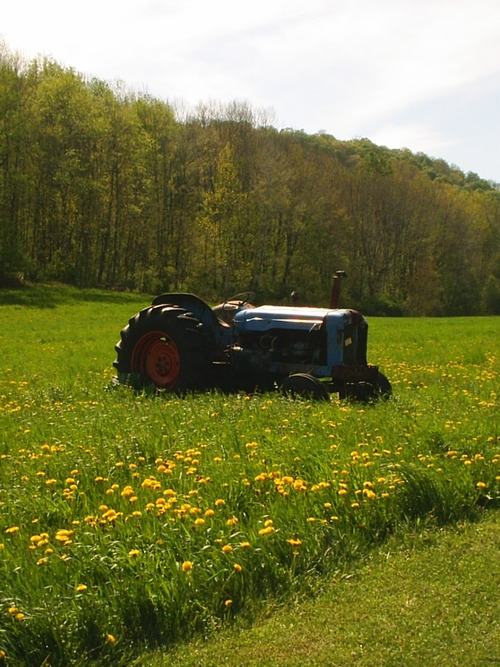
A few years ago I spent some time writing in Ithaca and it quickly became one of my favorite places in the world. My childhood best girlfriends came up to visit and we discovered truck graveyards, gleaming gyms, great food, friendly hippies, an Art parade, wineries, lakes and these things called “gorges," which are…well, lovely. Just look at this beautiful tractor! (Please remember I am a city girl and we do not have beautiful tractors in the city.)
In July I’ll be returning to lead workshops for the third year of One Story’s Writers Workshop. This intensive week of class, lectures and panels was my (and Michael Pollock’s) baby when I was the Associate Editor for One Story, and I love participating every year. If you are an emerging (people hate the word emerging but I don’t mind it as I think we are all still emerging until we stop emerging, that is to say, die) writer who is wondering: how on earth do I put together a career out of these scribbles I love so much, consider joining us at The Center for Fiction this July. For more information, here is a silly blog I wrote about it after the completion of the first year, in which I overuse the word amazing.
New York is Always Hopeful
From Dorothy Parker’s essay, "My Home Town"
McCall’s, January 1928
(With thanks to Margaret Zamos-Monteith for sending this to me)
It occurs to me that there are other towns. It occurs to me so violently that I say, at intervals, “Very well, if New York is going to be like this, I’m going to live somewhere else." And I do — that’s the funny part of it. But then one day there comes to me the sharp picture of New York at its best, on a shiny blue-and-white Autumn day with its buildings cut diagonally in halves of light and shadow, with its straight neat avenues colored with quick throngs, like confetti in a breeze. Some one, and I wish it had been I, has said that “Autumn is the Springtime of big cities." I see New York at holiday time, always in the late afternoon, under a Maxfield Parish sky, with the crowds even more quick and nervous but even more good-natured, the dark groups splashed with the white of Christmas packages, the lighted holly-strung shops urging them in to buy more and more. I see it on a Spring morning, with the clothes of the women as soft and as hopeful as the pretty new leaves on a few, brave trees. I see it at night, with the low skies red with the black-flung lights of Broadway, those lights of which Chesterton — or they told me it was Chesterton — said, “What a marvelous sight for those who cannot read!" I see it in the rain, I smell the enchanting odor of wet asphalt, with the empty streets black and shining as ripe olives. I see it — by this time, I become maudlin with nostalgia — even with its gray mounds of crusted snow, its little Appalachians of ice along the pavements. So I go back. And it is always better than I thought it would be.
I suppose that is the thing about New York. It is always a little more than you had hoped for. Each day, there, is so definitely a new day. “Now we’ll start over," it seems to say every morning, “and come on, let’s hurry like anything."
London is satisfied, Paris is resigned, but New York is always hopeful. Always it believes that something good is about to come off, and it must hurry to meet it. There is excitement ever running its streets. Each day, as you go out, you feel the little nervous quiver that is yours when you sit in the theater just before the curtain rises. Other places may give you asweet and soothing sense of level; but in New York there is always the feeling of “Something’s going to happen." It isn’t peace. But, you know, you do get used to peace, and so quickly. And you never get used to New York.

Photo by my friend Cindy Augustine. Find more of her work here.
Thank you
The happiest surprise of publishing Safe as Houses has been the people who have reached out to me at readings and on all sorts of social media (is that how you pluralize that?) to tell me how they appreciated the stories. "Sometimes You Break Their Hearts, Sometimes They Break Yours" seems to have particularly resonated with a few people who have, like me, gone through a period of time feeling like an alien on the earth. I wrote that story during a difficult time when I needed to make myself laugh. It was beyond worth it if it helps anyone else. Though I’ve written back and bent the ears of anyone who has reached out to me, I want to say again: your words are not lost on me. I think you are so brave and I thank you for sharing your stories with me. So many people seem to have had the experience of being ostracized for being different that I feel certain we “aliens" are never truly alone.
The pleasure of your company is requested...
The pleasure of your company is requested...
Early Spring has me traveling like a carney of fiction with a hobo pack of words. I will be in Boston, Baltimore, Iowa, and good ole NYC. Someday soon I hope to confirm a reading in my hometown but thus far Philadelphia has been elusive and moody. It will make it all the sweeter when I return in a glittery explosion of Rocky theme music and Federal Donuts. Until that day, I look forward to talking books with people in all of these other lovely towns, getting to hear amazing readers, and putting a few more miles on the odometer. Is there anything better than driving around America? The answer is no. Would love to see you along the way…
SAH named Outstanding Collection from 2012
SAH named Outstanding Collection from 2012
The Story Prize named SAFE AS HOUSES an Outstanding Collection of 2012! I am DELIGHTED BEYOND REASON, in awe of the company my little book keeps on this list, and so thankful to University of Iowa Press Short Fiction & Poetry.
Tender Spirits, an Interview with The Paris Review
Tender Spirits, an Interview with The Paris Review
"I think you can read phoniness in a second in fiction. It’s actually tremendously easy to write mean fiction with selfish people making selfish choices about selfish things. It’s much harder to write well-developed, complicated, contradictory characters."
My interview with the supremely thoughtful and intelligent, wonderful listener and writer Jessica Gross.
The Wellspring House
[gallery]
Recently I was able to visit The Wellspring House, a retreat for poets and writers in the foothills of The Berkshires in Massachusetts. There I was able to sit by a fire and chat with Preston Browning, the writer and teacher who founded The Wellspring House twelve years ago with his lovely poet wife, Anne. If you are a writer or artist looking for a peaceful space to work, I highly recommend this special house.
Library Journal includes Safe as Houses on their list of "2012 Short Story Collections I Couldn't Forget."
NEATO MOSQUITO! I do hope the collection isn’t “unforgettable" just because of all the shameless murder scenes and erotic images.*
*There is neither murder nor erotica in Safe as Houses. The management is aware that the collection is the poorer for it.
Sincerely, The Management
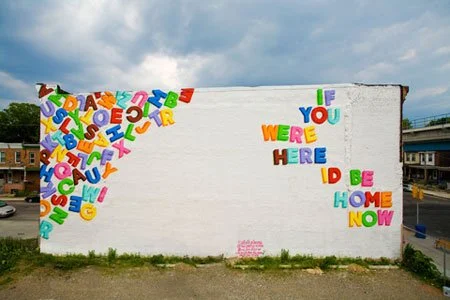
If you were here I'd be home right now
Yet Another Year End List, by Sean Carman on The Huffington Post Books site
Yet Another Year End List, by Sean Carman on The Huffington Post Books site
Sean Carman gives Safe as Houses love on The Huffington Post Books site! Along with my dear friend Elliott Holt’s twitter murder mystery short story! Exclamation points for everyone!
"The stories in Safe as Houses are quirky and hilarious, but also tell honest emotional truths. It is exceedingly difficult to manage the emotional distance this kind of storytelling requires. Each one is a literary gem."
New Year's Day at The Saint Mark's Poetry Project
[gallery]
New Year’s Day at The Saint Mark’s Poetry Project
Patty Smith sings a beautiful poem for the children of Connecticut with Lenny Kaye, Steve Earle reads a poem about being a musician in the company of poets, Lee Renaldo plays a song about Occupy, and The Secret Orchestra plays some jazz. An all day marathon of poets and dancers and musicians and…
"Our Education" by Lincoln Michel

Vol. 9, No. 1
EDITOR’S NOTE
So many of childhood fantasies are, from the perspective of a worry-prone adult, nightmares: running away, becoming an orphan, living in a boxcar. Yet the realities of such disorder eventually trump our desire for it; any kid who has tried to run away knows the feeling of getting half way down the block with a backpack and thinking, in a word, crap. This is the moment in which we find the narrator of Lincoln Michel’s tale of scholastic anarchy, “Our Education.” He is trapped in a school from which the teachers have all disappeared, but in his case, there is no option to break the fantasy, to go home.
This earnest and cautious young student continues to work on his final assignment in secret, searching for clues of the teachers and their legacy. “I cannot say what the lack of faculty means,” he thinks, in a deliciously ambiguous turn of phrase. Yet even to speculate on such matters is forbidden. “The concept of the teachers is absurd. What kind of teacher would leave their students?” says the tyrant of the group, former football team captain Clint Bulger. “Such a teacher would be no teacher at all.” And here Lincoln reveals an ontological fissure, one of the many things he does so well: the teachers never existed because they failed to meet the definition of teachers.
All the while the teachers’ lounge, authority’s dark spaceship, is a tall, black column that sits at the center of the cafeteria. Some, who can’t believe the teachers have vanished, think they are holed-up inside, watching. Whenever a hero falls—Lance Armstrong dopes, Bill Clinton cheats, Martha Stewart commits insider trading—I can’t help but think of the Simon and Garfunkel lyrics, “Where have you gone Joe DiMaggio? Our nation turns it lonely eyes to you.” Because in the absence of a hero, what once was a pillar, an organizing principle, is now a dark center—the vacuous teachers’ lounge around which the students, whether they like it or not, eat tater tots and run free.
Halimah Marcus
Co-Editor, Electric LiteratureMake a New Year’s Resolution
To Support Free Fiction
Single Sentence Animation
Our Education
by Lincoln Michel
Recommended by Electric Literature

TIME PASSES UNEXPECTEDLY or, perhaps, inexactly at the school. It’s hard to remember what semester we are supposed to be in. Several of the clocks still operate, but they don’t show the same time. The red bells, affixed in every room, erupt several times each day, yet the intervals between the disruptions wax and wane with an unknown algorithm. The windows are obscured by construction paper murals. Consequently, the sun rises and falls in complete ignorance of those of us attending the school. Many of us participated in the decorations in some lost point of childhood. A few of us still have dried glue under our fingernails.
In the room I sit in now, the windows are covered with a glitter and glue reenactment of the colonization of Roanoke by Sir Walter Raleigh. Outside of the window, who knows?
In my spare time, I write notes for an assignment on my education at the school. I’ve always believed that I’m destined for somewhere better. In my hidden heart, I hold hope that my essay will help me get out of the school.
My classmates laugh at me, even my second closest friend.
“You’ll never turn this in,” he says, grabbing at my notebook. “There will never be anyone to accept it!”
“Leave him alone,” Beanpole Paula says.
“Of course you defend him,” he says, winking at her from beneath his self-cropped brown hair.
Beanpole Paula gives my second closest friend a sharp shove. His shirt bears the logo of a rock band I’ve never heard. When he smiles, I see his braces are discolored with vending machine candy. What’s his name? Either Tommy or Timmy.
Obviously we no longer learn anything at the school or, perhaps more accurately, we learn many things, but not the things that we were meant to learn. We learn about love and pain and friendship. A few of us even learn about fornication, most by watching from afar (twice Carmichael, a small and sickly boy, and I have snuck behind the bleachers to watch the more muscular and nimble students tear off each other’s gym uniforms). History, mathematics, and biology are subjects lost to another time. Most of our textbooks have been repurposed for fuel. There is an ongoing fire in the back corner of the cafeteria.
I myself only have two books, novels long past their stamped due dates, which I keep tucked underneath spare clothes in the back of my locker.
Much of our hushed hallway discussion concerns the teachers. Surrounded by the pale orange lockers, nasty words are uttered. The whispering is merely a habit. The teachers are all dead. Or else they are sleeping. Or in hiding. All that is known is that the teachers have disappeared and the teachers’ lounge is barricaded from the inside.
After the lunch bell, I hurry back to the front hallway with Beanpole Paula. We have an armload of chicken sandwiches, no sauce.
“That was close,” she says.
Paula is almost six feet tall and walks with her back hunched over. I find her awkwardness endearing. She is, currently, my closest friend. We know that our arrangement might end as soon as tomorrow, so when we smile at each other there is a conspiracy in the air. We slap hands in celebration.
“We make a good team,” Paula says, pressing a sandwich to her mouth with both hands. “Let’s always stick together.”
Then Timmy interrupts us, rounding the corner with a half-eaten pizza slice.
Randal has staked the position that the disappearance of the teachers is a victory for the students.
“This school only ever existed to beat us down and prepare us for a world in which we were powerless and others were powerful. Homework is indoctrination, education a cog in the machine of the ruling class.”
Timmy cheers him on enthusiastically. “What can you learn from teachers and tests?” he hoots. “The whole system is fucked from the start.”
Beanpole Paula and Carmichael, on the other hand, hold a different point of view. They are distraught about our lack of teachers.
“What if the teachers have gone in search of better students?” Paula says. “What if we have been forsaken? Left behind?”
Despite beckoning from both sides, I don’t enter the debates. I cannot say what the lack of faculty means. I am, however, working to preserve my chances if the teachers do return. I want to believe that if they return, I will be chosen to graduate to a better place. This is why I work on the assignment in my spare time.
I keep the paper folded in my back pocket. I don’t remember when I received it, but it’s my strongest proof that our teachers are coming back. The sheet of paper says: In your own words, a) what is the goal of your education and b) how far are you, in your mind, to achieving this goal?


My wish for you
May next year give you at least one surprise you like. May your coffees and goodbyes be Irish, your pencils sharpened, your friends all-weather, your linings silver (or dark grey with sparkles because that is very in right now). May all of your Stewarts be Jimmys, all of your Audreys, Hepburn. May you give birth to or say yes to or do something nice for or see a movie with or rescue or adopt or marry or meet for the first time your soulmate, and if you don’t believe in dumb, misguided things like soulmates, may someone or thing prove you wrong. May the jerks stay in 2012. May you never open the refrigerator to find, after pouring your cereal, you are out of milk. Because that is extremely frustrating. Finally, may you eat a lot, like a serious amount, of cupcakes and, should you come to find you don’t like cupcakes, may you give all of your cupcakes to me.
yours truly, Marie
5 Breakout Brooklyn Book People of 2012
5 Breakout Brooklyn Book People of 2012
I am a Brooklyn Break Out Person, according to The L Magazine. Does this mean I will finally get a buy back at The Double Windsor?!